







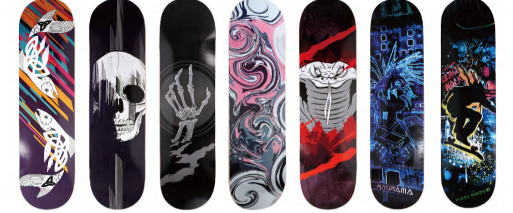
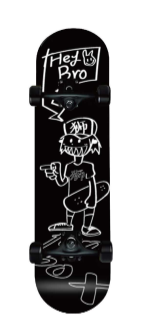

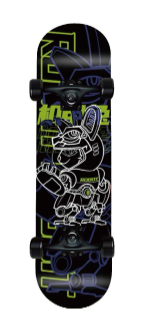


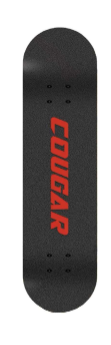
THE DESK (THE PLATFORM)
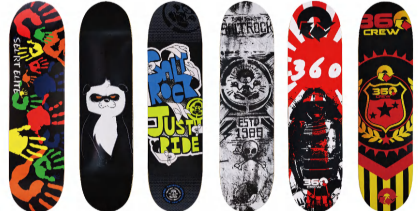
The deck is the main component where the rider stands. Key aspects to describe include:
Material: Usually made of 7-ply Canadian maple, which is known for its durability and "pop" (flexibility/responsiveness). High-end boards may use bamboo or carbon fiber for weight reduction.
Concave: The curve of the deck from edge to edge. A steeper concave allows for better leverage during tricks, while a flatter deck is more stable for cruising.
Shape: * Popsicle: The standard symmetrical shape with a nose and tail, ideal for street and park skating.
Cruiser/Old School: Often wider with a flat tail, designed for comfortable transportation.
Grip Tape: The sandpaper-like layer on the top that provides traction for the rider's shoes.
TRUCKS (STREEING)
These are the metal T-shaped pieces that attach the wheels to the deck and allow the board to turn.
Width: The trucks should generally match the width of the deck.
Bushings: These are the rubber/urethane components inside the trucks that determine how easily the board turns. Softer bushings make for sharper, easier turns, while harder bushings offer stability at high speeds.
Hanger & Baseplate: The main body of the truck. Lightweight aluminum is the industry standard for balancing strength and weight.
WHEELS & BEARINGS (THE MOVEMENT)
These determine how the board performs on different surfaces.
Wheel Size (Diameter): Measured in millimeters (mm). Smaller wheels (50mm–54mm) are better for technical tricks; larger wheels (56mm+) are better for rougher terrain and higher speeds.
Wheel Durometer (Hardness): Measured on the Shore A scale.
Hard (99A–101A): Great for smooth skateparks and trick execution.
Soft (78A–90A): Better for cruising, as they absorb vibration and grip the road better.
Bearings: Usually rated by the ABEC scale (e.g., ABEC 5, 7, or 9). Higher numbers generally indicate tighter tolerances and smoother rolling performance.
Reviews & Ratings
Frequently Bought Products

Quick Links
Contacts
-
Address
Linkage Global Sourcing, Damascus Street Al Qusais Industrial Area 1 Dubai, UAE
-
Phone
-
Email
-
Address
Linkage Global Sourcing, Damascus Street Al Qusais Industrial Area 1 Dubai, UAE
-
Phone
+971-4-2270309
-
Email