





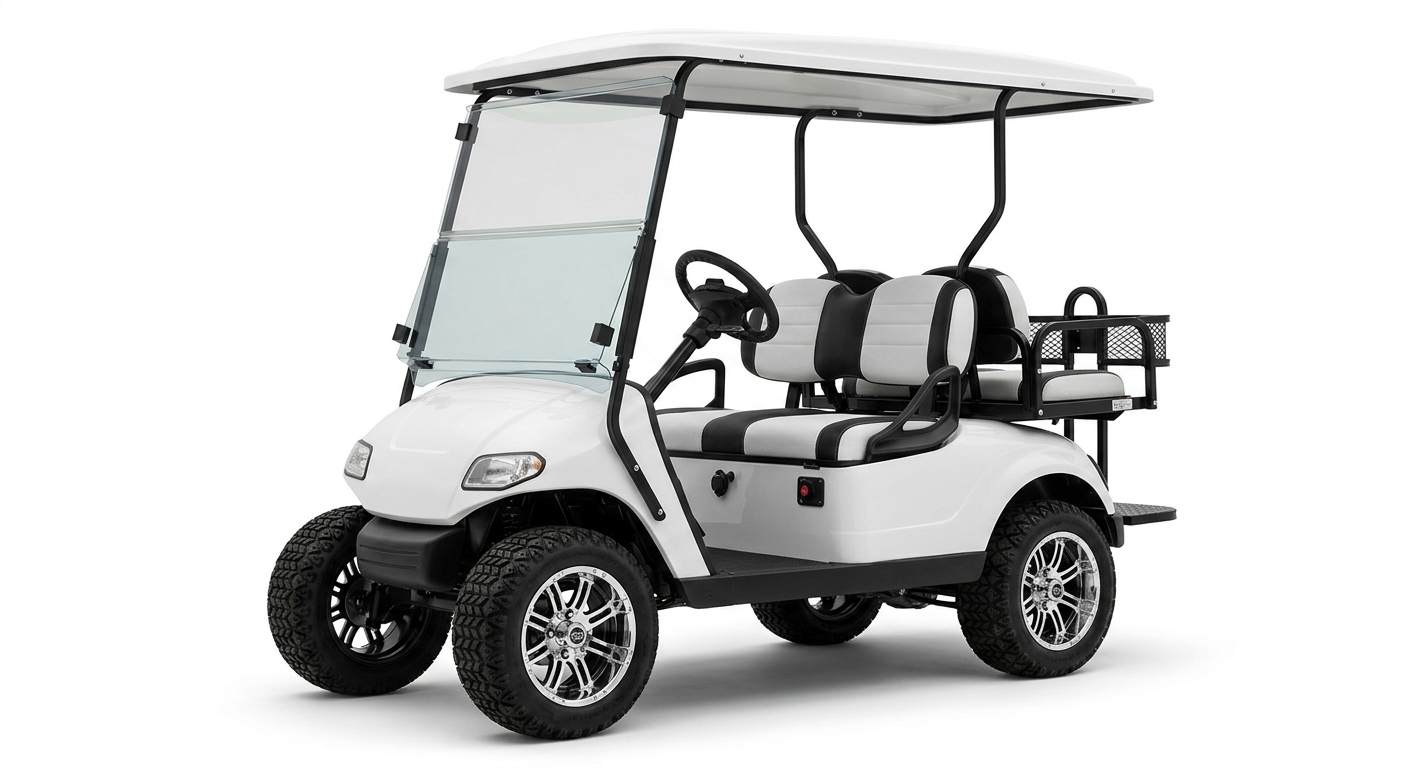

Design and Maneuverability: Golf carts are built with a tight turning radius for navigating narrow paths, making them highly maneuverable in restricted spaces.
Seating Capacity: Standard models typically seat two to four passengers, though extended versions can accommodate six or more.
Operation: They are engineered for low-speed operation, generally reaching maximum speeds between 15–25 mph depending on local regulations and vehicle modifications.
Common Power Configurations
Electric Carts: These utilize rechargeable battery packs to power an electric motor. They are favored for being quiet, producing zero emissions, and requiring minimal maintenance compared to combustion models.
Gasoline-Powered Carts: These feature small internal combustion engines, typically fueled by gasoline. They are preferred for environments where longer range is required and where frequent recharging of electric batteries is not practical.
Usage and Applications
Recreational Use: Primarily used on golf courses to transport players and their clubs.
Utility Use: Frequently employed in large-scale residential areas, resorts, airports, and industrial complexes for maintenance, security, and shuttle services.
Street-Legal Variants: Some models are equipped with safety features such as headlights, turn signals, mirrors, and seatbelts to meet local "Low-Speed Vehicle" (LSV) requirements for use on public roads with specific speed limits.
Reviews & Ratings
Frequently Bought Products

Quick Links
Contacts
-
Phone
-
Email
-
Address
-
Phone
+971-4-2270309
-
Email